


Those involved in international trade, large-scale equipment, and bulk cargo transportation almost always face the same challenge: the larger the shipping container, the more prone it is to damage, collapse, and moisture damage during ocean transport.
Many factories, international trade businesses, and logistics procurement professionals are asking:
How effective are large-sized shipping containers made of honeycomb board?
Can they replace cardboard or wooden crates? Are they suitable for export via ocean freight?
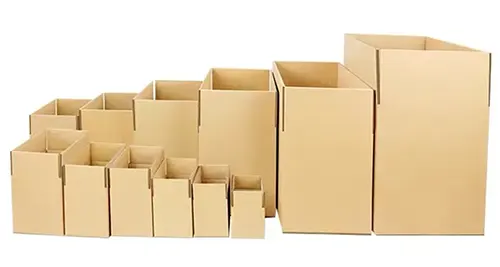
Today, I’ll cover everything in one go—drawing on real-world logistics scenarios, actual performance tests, pros and cons, and suitable applications—to help you avoid common packaging pitfalls and effectively reduce both damage rates and packaging costs.
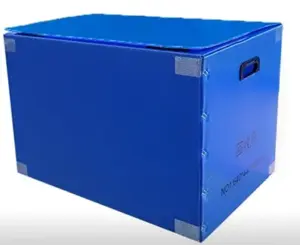
Large-Size Packaging Crates Made of Corrugated Sheets
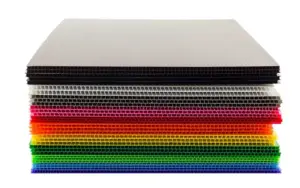
We manufacture corrugated sheets — also known as PP corrugated sheets, Wantong board, or plastic corrugated board — with polypropylene raw materials and innovative production techniques.
Based on the mechanical principles of an I-beam structure, it achieves high compressive strength and impact resistance despite its lightweight design.
It is currently the mainstream material used in industrial large-size packaging as an alternative to cardboard and wooden crates.
Compared to traditional packaging, its most notable features are:
hollow yet sturdy, lightweight yet not brittle, waterproof and durable, and reusable—perfectly addressing the core challenges of damage, moisture absorption, and deformation in large-size packaging boxes.
Core Advantages
Specifically Designed to Address Common Issues with Large Cartons
Specifically Designed to Address Common Issues with Large Cartons: No collapsing, no deformation, and excellent stacking resistance.
The most critical problem with large-size cartons is that their large dimensions result in a wide surface area exposed to stress.
After long-distance transport and multi-layer stacking, they are highly prone to bulging in the middle, collapsing at the corners, and cracking—problems that are difficult to completely resolve even with thicker cardboard.
In contrast, honeycomb panels, thanks to their hollow structure, effectively disperse and absorb stacking pressure and impact forces from vibrations.
Their compressive strength is five times that of ordinary cardboard boxes, and they are unlikely to break even after multiple drops from a height of 1.2 meters.
Whether for bulk ocean freight, high-stacking in containers, or long-haul trucking, the boxes remain rigid throughout the entire journey, preventing widespread crushing or deformation.
This reduces cargo exposure, wear and tear, and post-sale claims at the source.
Essential for Ocean Freight
100% waterproof and moisture-resistant—withstands humidity and salt fog.
The biggest threats to packaging in ocean freight logistics are high humidity, salt fog, and condensation.
Ordinary cardboard boxes soften, delaminate, and disintegrate when exposed to moisture—which is the primary reason many international trade customers file complaints about damaged packaging upon receipt.
Made from PP honeycomb board, these boxes do not absorb water, resist mold, and are impervious to moisture.
Even when exposed to the high humidity of ocean shipping for extended periods, exposed to rain outdoors, or stored in damp warehouses, the box’s rigidity and structural stability remain virtually unaffected.
Enhanced with UV-resistant and hydrophobic coatings, these honeycomb boxes exhibit a structural strength decay rate of less than 5% after 144 hours of salt spray testing, making them perfectly suited for cross-border ocean shipping.
Lightweight Design for Cost Savings
Lighter than wooden crates, yet more durable than cardboard boxes.
Anyone who works with large-format packaging knows: wooden crates are sturdy but heavy, resulting in high shipping costs, labor-intensive loading and unloading, and cumbersome export fumigation procedures;
Ordinary cardboard boxes are lightweight but not durable, leading to high single-use disposal costs; honeycomb panels perfectly balance the advantages of both.
High Customizability
Suitable for all types of oversized products.
Oversized goods come in a wide variety:
large machinery parts, home appliance components, large plastic items, building materials and panels, industrial semi-finished products, and oversized cross-border shipments—with no uniform size standards.
Customers can customize corrugated sheets to any oversized dimensions, with thicker profiles and reinforced corners.
Manufacturers can also pair it with corner protectors, divider cards, partitions, and packing stations to ensure the entire box fits the product snugly—eliminating space and movement—and completely resolve issues such as shifting, collisions, and wear during the transport of large items.
Manufacturers can also upgrade it with anti-static, flame-retardant, anti-aging, and anti-slip properties to accommodate the transport of electronics, precision equipment, and special industrial goods.
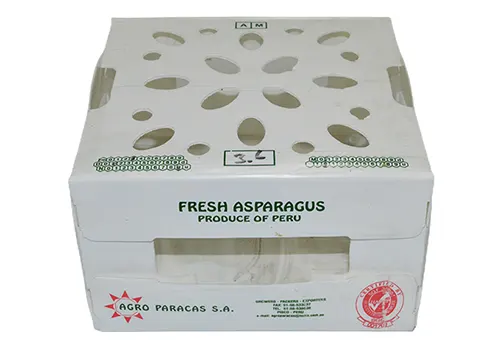
In the past, when selecting packaging, people focused solely on the price per purchase;
Now, established export-oriented factories and industrial enterprises are considering comprehensive logistics costs, damage costs, after-sales costs, and long-term turnover costs.
Large-size corrugated sheets shipping containers, with their core advantages of lightweight, high strength, water resistance, durability, and reusability, perfectly address all the challenges associated with shipping large items by sea, long-distance logistics, and warehouse stacking.
For businesses focused on long-term operations, committed to maintaining a strong reputation for order fulfillment, and seeking to reduce costs and improve efficiency, this is not a superfluous upgrade—it’s the most cost-effective solution for enhancing packaging risk management.
If your factory frequently ships large, oversized goods by sea and struggles with damaged, damp, or collapsed cartons, consider upgrading to a hollow-core board packaging solution to ensure every shipment reaches your customers in perfect condition.
Conclusion
For large-size packaging, choosing the right material is not simply about comparing the purchase price of cardboard, wood, and plastic.
It is about finding a packaging solution that can withstand the entire logistics process—from packing and stacking to long-distance transportation, ocean freight, and final delivery.
Corrugated PP sheets offer a practical alternative to traditional cardboard and wooden crates.
Their lightweight yet rigid structure provides excellent impact and stacking resistance, while their waterproof and moisture-resistant properties make them particularly suitable for demanding shipping environments.
Their reusable design and flexible customization also help reduce packaging waste, damage-related costs, and long-term logistics expenses.
For factories, exporters, and logistics companies regularly shipping oversized or heavy products, corrugated sheet packaging can provide a more reliable way to protect cargo while improving packaging efficiency and controlling total transportation costs.
If your current packaging frequently suffers from collapse, moisture damage, deformation, or high replacement costs, it may be time to move beyond traditional cartons and consider a custom corrugated PP packaging solution designed specifically for your products and shipping conditions.