


With the continued boom in cultural and tourism events, commercial roadshows, outdoor festivals, and rural performing arts markets, the stage construction industry has long since moved beyond the era of a “good enough” approach.
Today, the core requirements of event organizers, rental companies, and construction teams center on four key dimensions: safety and slip resistance, all-weather durability, low wear and tear, and reusability.
This is especially true for high-frequency outdoor events, where complex environmental conditions—such as heavy rain, high humidity, significant day-night temperature fluctuations, and intense sun exposure—place increasingly stringent demands on the quality of stage decking.
The shortcomings of traditional solid-wood stage decking—and even modified soccer-patterned wooden decking—when used outdoors over the long term have become increasingly apparent.
As a result, hollow plastic soccer-patterned stage decking, which offers more stable performance and better value for money, is emerging as the new trend in the industry.
Many experienced stage construction professionals agree: even among soccer-patterned anti-slip stage panels, different materials result in vastly different service lives and user experiences.
Currently, the mainstream products on the market fall into two categories: traditional solid wood stage panels with a soccer-pattern embossing, and new PP hollow plastic soccer-pattern stage panels.
Even though both feature a soccer-pattern embossed anti-slip design, there are vast differences in core performance, durability, and maintenance costs.
Today, we’ll conduct a comprehensive, real-world comparison based on actual outdoor usage scenarios.
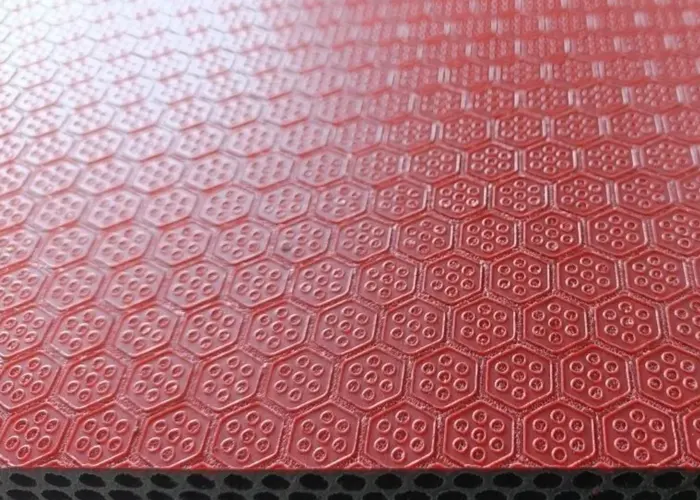
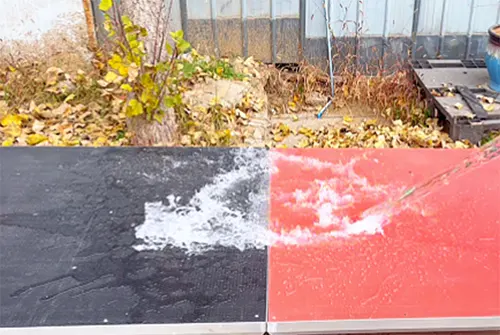
Waterproofing and Moisture Resistance Comparison: During the Outdoor Rainy Season, the Difference Is Clear
Standard wooden stage boards have extremely poor water resistance.
Since wood is naturally absorbent, exposure to outdoor rain, damp ground, or nighttime dew can easily cause swelling, buckling, delamination, and cracking—rendering them virtually unusable after just a few events.
The upgraded soccer-patterned wooden stage panels, while featuring an anti-slip embossed texture on the surface, still have a wooden base.
This fails to address the root cause of water absorption and moisture retention, leaving outdoor installations during the rainy season fraught with risks.
Once exposed to moisture, the panels warp and the gaps between them widen, not only affecting the stage’s levelness but also significantly reducing its load-bearing stability.
In contrast, hollow plastic soccer-patterned stage panels are made from virgin PP eco-friendly material through a one-piece molding process.
They are completely non-porous, do not absorb water at all, and do not delaminate.
They are impervious to heavy rain and dew; even when left outdoors for extended periods, they will not absorb moisture, warp, bulge, or peel.
After an event, there’s no need to air-dry them—simply rinse with clean water before storing.
They are perfectly suited for rainy summer weather and the humid outdoor conditions of southern regions, completely resolving the challenges associated with wooden panels during the rainy season.
Comparison of Pest and Mold Resistance: Say Goodbye to Warehouse Losses, Enjoy Worry-Free Long-Term Storage
The fatal flaw of wooden panels is their susceptibility to mold and insect infestation.
Whether it’s ordinary wood or soccer-patterned wood panels, the wooden substrate is rich in fibers.
When stored for long periods or used in humid environments, it is highly prone to mold growth and insect egg infestation, leading to issues such as blackening, mold, and insect-bored holes.
This not only affects the appearance but also damages the internal structure of the panels, leading to reduced load-bearing capacity and a drastic shortening of their service life.
Each year, substantial quantities of damaged panels require scrapping, indirectly driving up procurement expenses significantly.
Hollow plastic soccer-patterned stage panels are dimensionally stable and inherently resistant to insects, mold, and decay.
They do not harbor bacteria or attract insects or ants, and they remain unaffected by humid storage environments.
They do not develop mold or rot when stored year-round and remain intact even after long-term, repeated use.
By eliminating insect infestation and mold damage at the source, they significantly reduce material scrap rates.
Anti-Slip Safety Comparison: Same Pattern, Different Durability
Most people believe that as long as a product features a soccer ball pattern, its anti-slip performance is the same—but this is not the case.
The soccer ball pattern texture on wooden stage panels is only embossed on the top surface layer.
After prolonged, frequent foot traffic and exposure to rain, the pattern is highly susceptible to wear and fading, and the top layer can peel off, causing anti-slip performance to deteriorate rapidly.
As a result, the surface remains slippery when wet, posing a significant safety hazard.
Hollow plastic stage panels utilize a one-piece molded soccer-pattern embossing process, resulting in uniform texture depth, exceptional adhesion, and superior wear resistance.
Even after prolonged foot traffic, equipment pressure, and outdoor exposure to the elements, the texture remains resistant to wear, ensuring long-lasting and stable physical slip resistance.
Even when the surface is wet with rain, spilled drinks, or oil stains, the panels maintain a firm grip, effectively preventing performers and guests from slipping and ensuring safety throughout the event.
Corrosion Resistance, Weather Resistance, and Cost-Effectiveness: Overwhelming Advantages for Long-Term Reuse
Wooden panels have extremely poor weather resistance; they are not resistant to acids, alkalis, or corrosion.
When used outdoors on grassy areas, in dusty environments, or in acidic or alkaline settings, they are highly susceptible to erosion and damage.
Additionally, they are prone to cracking and warping under extreme temperature fluctuations, making them poorly suited for year-round use.
Although the unit price per purchase may seem low, the high wastage and frequent replacements result in persistently high long-term operational costs.
Hollow plastic soccer-patterned stage panels are resistant to acids and alkalis, corrosion-proof, and resistant to aging.
They withstand both high temperatures and extreme cold, making them suitable for year-round indoor and outdoor use, and can withstand the rigors of outdoor exposure to intense sunlight, rain, snow, and frost.
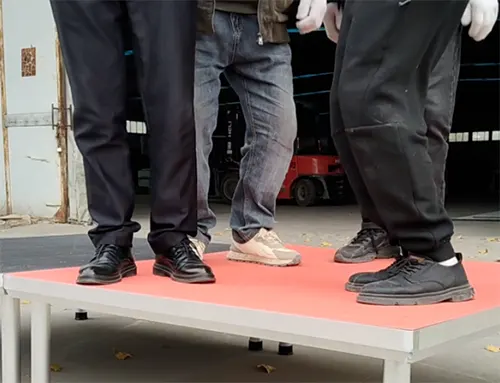
Their unique hollow mechanical structure ensures lightweight construction while maintaining high load-bearing capacity, providing stability and safety for equipment placement and heavy foot traffic.
They also support quick reinforcement with nails, making setup efficient and hassle-free.
A single purchase allows for years of reusable service with virtually zero maintenance and low wear and tear, offering a comprehensive cost-effectiveness that far exceeds that of any type of wooden stage board.
Conclusion: Industry Evolution and Material Upgrades Are an Inevitable Trend
We carried out a full performance comparison across various stage panel products.
Traditional wooden panels and soccer-patterned wooden panels merely meet basic structural and anti-slip requirements.
They cannot solve core technical problems including waterproofing, mold resistance, pest resistance, and rot resistance.
By comparison, hollow plastic soccer-patterned stage panels integrate multiple superior performances.
These merits cover waterproofing, slip resistance, insect resistance, mildew resistance and corrosion resistance.
They also feature high load-bearing capacity and excellent weather resistance.
Such properties adapt well to high-frequency, all-weather and full-scenario outdoor stage deployment.
For stage rental and event setup enterprises, the adoption of hollow plastic stage panels brings multiple benefits.
It improves the overall quality of event venues and reduces safety disputes. It effectively cuts operational costs and strengthens core market competitiveness.
Thus, these panels serve as the preferred option for stage material upgrade.