


Materials form one of the fundamental elements of architecture, allowing architects to develop diverse architectural expressions. Traditional building materials can no longer fully meet China’s goals for a resource-efficient society.
As the economy develops, energy consumption has become a major national concern. The energy-intensive construction industry consequently faces new opportunities and challenges.
Green buildings have become a major approach to improving building energy efficiency and promoting sustainable construction. Green building materials provide the foundation for achieving these objectives.
Using biodegradable and recyclable materials during construction can conserve substantial resources and reduce environmental pressures. These advantages make innovative green building materials increasingly important.
Introduction and Development of Polycarbonate Multiwall Sheets
Polycarbonate multiwall sheets, commonly known as sunlight panels, initially served greenhouses, advertising lightboxes, and highway noise barriers. Their understated appearance and simple installation methods often created impressions of low cost and temporary construction.
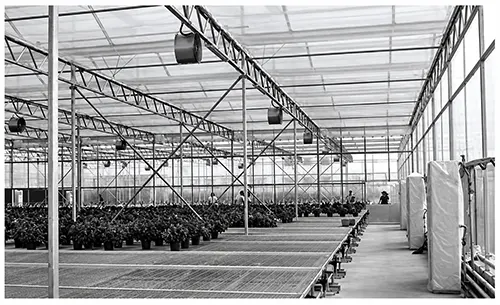
However, advances in manufacturing processes and production technologies have gradually expanded their architectural applications. Polycarbonate multiwall sheets now appear in industrial buildings, sports stadiums, and airport terminals.
These large-span structures require effective daylighting across extensive interior spaces. Polycarbonate multiwall sheets help solve this challenge through their excellent light transmission and stable physical properties.
Their convenient installation also makes them attractive alternatives to traditional glazing. Consequently, architects increasingly use these sheets for building skylights and daylighting roofs.
As practical experience accumulated, designers began exploring polycarbonate multiwall sheets for exterior wall applications. This development introduced new possibilities for contemporary architectural design.
Material Characteristics of Polycarbonate Multiwall Sheets
Polycarbonate is a transparent synthetic plastic with high tensile yield strength and good mechanical properties. It also offers a high refractive index and excellent processability.
However, the material has relatively poor abrasion resistance despite its ability to withstand elevated temperatures. Its heat deformation temperature reaches approximately 135°C, while its low-temperature deformation limit reaches -45°C.
Polycarbonate multiwall sheets consist of two or more parallel polycarbonate layers connected by internal reinforcing ribs. This arrangement creates a stable three-dimensional structure.
The reinforcing ribs improve impact resistance while slightly reducing light transmission. Meanwhile, the internal hollow chambers enhance the material’s physical performance.
These air cavities improve thermal insulation and sound insulation compared with solid polycarbonate sheets. Their combined material and structural properties make polycarbonate multiwall sheets promising green building materials.
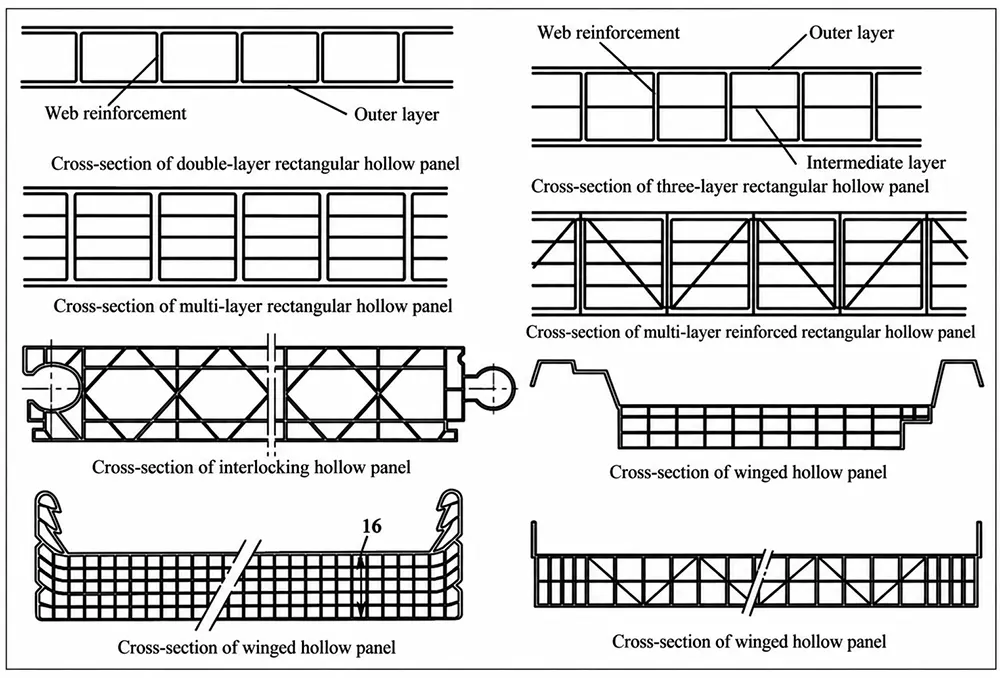
Polycarbonate multiwall sheets offer several important performance characteristics that support their architectural applications.
Light Transmission Without Clear Visibility
Polycarbonate multiwall sheets can achieve light transmission rates of up to 82%, approaching the transparency of flat glass. However, their composite structure diffuses light and limits direct visibility.
This combination allows daylight to enter interior spaces while providing visual privacy.
Soft and Uniform Light Diffusion
Natural light passing through polycarbonate multiwall sheets creates soft, diffused illumination inside buildings. This effect reduces glare and improves indoor visual comfort.
The material transmits most visible light while blocking substantial amounts of ultraviolet and infrared radiation. These properties support applications in exhibition halls and museums requiring carefully controlled lighting environments.
Lightweight Structure and High Strength
Polycarbonate has a density of approximately 1.18–1.22 g/cm³, while the article reports ordinary glass densities of 2.4–12.8 g/cm³. Multiwall construction further reduces the weight of polycarbonate panels.
Some multiwall sheets weigh approximately one-twentieth as much as glass of equivalent thickness. Nevertheless, their impact resistance can exceed that of similar glass by more than ten times.
Unlike ordinary glass, polycarbonate does not typically experience the same brittle fracture behavior. These characteristics improve installation convenience and structural safety.
Good Fire Resistance
Polycarbonate multiwall sheets exhibit self-extinguishing behavior and have an ignition temperature of approximately 630°C. The article reports a B1 flame-retardant classification based on testing.
This fire performance contributes to their suitability for various architectural applications.
Excellent Weather Resistance
Polycarbonate multiwall sheets offer strong resistance to temperature variations. The article reports a heat deformation temperature of 140°C and a brittleness temperature of -110°C.
The material maintains relatively stable physical properties under normal environmental conditions. Consequently, it can accommodate construction requirements across different climatic regions.
Manufacturers can also apply ultraviolet absorbers to sun-facing surfaces. These protective coatings reduce performance deterioration caused by prolonged ultraviolet exposure.
Significant Energy-Saving Performance
Four-layer polycarbonate multiwall sheets can achieve a heat transfer coefficient of approximately 3.8 W/(m²·K). This value is considerably lower than conventional insulating glass of comparable thickness, according to the article.
The internal air layers provide effective thermal insulation and reduce heat transfer. These characteristics make polycarbonate multiwall sheets highly effective insulating plastic panels.
Applications of Polycarbonate Multiwall Sheets in Buildings
Daylighting Roofs
Glass has traditionally served as a primary daylighting material in buildings. However, roof glazing requires both high light transmission and lightweight structural performance.
Conventional glass has substantial self-weight and can fracture under impact. These limitations create challenges for installation, safety, and long-term use.
Polycarbonate multiwall sheets provide optical performance comparable to glass while offering lower weight and greater impact resistance. They also distribute natural light more uniformly throughout interior spaces.
These advantages make polycarbonate multiwall sheets increasingly attractive for architectural roof daylighting systems. Their applications continue to expand as alternatives to conventional glass.
Curtain Wall Systems
Polycarbonate multiwall sheets offer distinctive visual characteristics and reliable physical and chemical properties. These qualities make them suitable materials for architectural curtain wall systems.
As architects gain practical experience, polycarbonate curtain wall applications continue to improve. However, single-layer polycarbonate systems still have limitations compared with conventional masonry exterior walls.
Their thermal performance and sealing capabilities may not fully satisfy all building envelope requirements. Architects therefore often incorporate polycarbonate multiwall sheets into composite exterior wall systems.
These systems combine different materials to improve thermal insulation, waterproofing, and sound insulation. Each component contributes its strengths while compensating for the limitations of other materials.
The resulting composite envelope can deliver better overall exterior wall performance.
Conclusion
China’s transition toward a resource-efficient and environmentally friendly society has increased the importance of green building development. Sustainable construction has become an essential direction for modern urbanization.
Traditional energy-intensive building materials can no longer satisfy evolving environmental and resource conservation requirements. Innovative green building materials therefore provide important alternatives.
Polycarbonate multiwall sheets offer considerable potential as sustainable architectural materials. Their lightweight construction, light transmission, insulation performance, and installation convenience support diverse building applications.
Architects should explore their properties further and promote appropriate applications in green buildings. Practical design experience can reveal additional opportunities for sustainable construction and material innovation.