


Solar energy is an enormous energy source, radiating about 3.8 × 10²⁰ MJ into space every second. About one 2.2-billionth of this energy reaches Earth.
Solar cells can directly convert light energy into electricity through the photovoltaic effect. However, their brittle materials make them vulnerable during transportation.
Bumps, impacts, vibrations, and rough handling can cause a relatively high breakage rate. Therefore, breakage rate is an important indicator of packaging performance in the photovoltaic industry.
Another important indicator is the packaging material’s ability to protect products against oxidation. As packaging technology develops, existing packaging solutions also need continuous improvement.
This study examines transport packaging for solar cells. It compares commonly used corrugated sheet boxes with corrugated sheet boxes to evaluate their practical suitability.
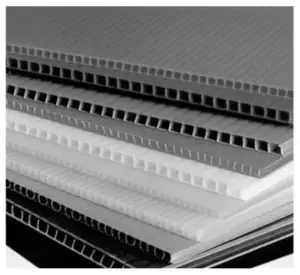
Polypropylene Corrugated Sheet Material Information
Polypropylene corrugated sheet is produced by extruding a mixture of polypropylene and polyethylene through a corrugated sheet production line. Its cross-section has a grid structure, so it is also called grid corrugated sheet.
The material is non-toxic, non-polluting, corrosion-resistant, waterproof, and shock-resistant. Manufacturers can also add different masterbatches to achieve specific performance requirements.
For example, adding flame-retardant masterbatch creates flame-retardant corrugated sheets for applications with strict fire-protection requirements. As an environmentally friendly packaging material, corrugated sheet produces no dust during use and offers a long service life.
Transport Packaging Design for Solar Cells
Solar Cell Product Information
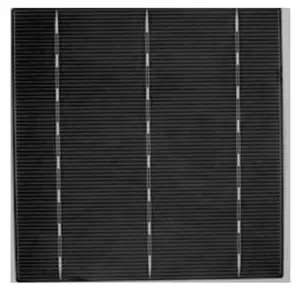
Solar cells generally include monocrystalline silicon, polycrystalline silicon, and amorphous silicon types. Monocrystalline silicon solar cells are among the most rapidly developed solar cell technologies.
Their surfaces consist of dark-blue silicon wafers. Screen printing applies precisely prepared silver paste onto the wafers to form grid lines.
The solar cells measure 165 mm × 165 mm and have a thickness of 0.03 mm. Packaging must prevent oxidation, static electricity, scratches, vibration, and impact.
The products also cannot withstand their own weight.
Solar Cell Packaging Design
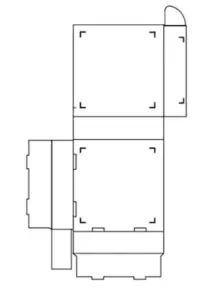
Solar cells are thin and brittle. For horizontal packaging, a one-piece corrugated sheet box was designed according to the existing cell dimensions.
The solar cells are placed flat inside the corrugated sheet box. This arrangement increases contact area and improves the cushioning performance of the packaging.
The corrugated sheet box is relatively small, so it must provide sufficient support for the complete package. A 3 mm thick corrugated sheet is suitable for the box structure.
Characteristics of Corrugated Sheet Boxes for Solar Cell Packaging
Solar cell packaging has several special requirements. The following comparison with corrugated sheet boxes explains the suitability of corrugated sheet boxes.
Breakage Rate
The solar cell breakage rate is an important indicator of packaging performance. Therefore, a field transportation test was conducted at a photovoltaic manufacturing plant.
One full pallet of solar cells served as each test unit. A 2 × 2 × 3 stacking arrangement allowed each pallet to hold 12 cartons.
Each carton contained 12 boxes, and each box contained 100 solar cells. One pallet used corrugated sheet boxes, while another pallet used corrugated sheet boxes.
The packaged solar cells were transported by truck from Shaanxi to Shanghai and then returned to Shaanxi. The entire logistics process lasted about four days.
After transportation, inspectors opened the packages and examined the solar cells. The corrugated-sheet-box pallet contained 21 damaged cells, representing a 0.1458% breakage rate.
The corrugated-sheet-box pallet contained only four damaged cells, giving a breakage rate of 0.0277%. Both packaging solutions met the company’s requirement of less than 0.4% breakage.
However, the corrugated sheet box produced a lower breakage rate. Therefore, it showed greater suitability for solar cell packaging in this test.
Oxidation Resistance
Air and water are common causes of oxidation. Therefore, solar cell packaging must effectively isolate the products from both factors.
China is a major solar manufacturing country, and many solar cells require export transportation. For example, shipments to South Africa often use sea freight to reduce transportation costs.
Marine environments can be extremely harsh, with many uncontrollable factors. These conditions place particularly high demands on packaging performance.
Corrugated board deforms after exposure to water. Its compression strength and oxidation protection also decline significantly, while its recovery performance remains poor.
Compared with corrugated sheet boxes, corrugated sheet boxes are lightweight and waterproof. These properties make them more suitable for harsh transportation environments.
Antistatic Protection
Corrugated sheet material itself does not provide antistatic protection. Therefore, additional antistatic foam helps reduce static electricity’s effects on photovoltaic products.
Both packaging solutions use XPE foam for this purpose. XPE provides antistatic protection while also cushioning the products against mechanical loads.
XPE is polyethylene foam containing antistatic agents. It is widely used for static-sensitive and fragile products in automotive, marine, and construction applications.
Cost Analysis
Market price analysis shows that a 180 mm × 180 mm × 50 mm corrugated sheet box costs about RMB 1.72. It is generally discarded after one or two uses.
Based on two uses, its cost is approximately RMB 0.86 per use. A corrugated sheet box of the same size costs RMB 3.20.
However, corrugated sheet boxes generally last four to ten times longer than corrugated board boxes. After four uses, the cost falls to RMB 0.80 per use.
This represents a 6.98% cost reduction compared with the corrugated sheet box. After ten uses, the cost drops to RMB 0.32 per use.
At that level of reuse, the cost is 62.79% lower than the corrugated-sheet-box solution. Corrugated sheet boxes can therefore reduce costs for customers with long-term, repeated shipments.
For one-time customers, corrugated sheet boxes remain more economical because of their lower initial purchase cost.
Conclusion
Polypropylene corrugated sheet is a new environmentally friendly packaging material. Compared with widely used corrugated sheet boxes, it offers advantages in breakage reduction and oxidation protection for solar cells.
Corrugated sheet boxes have a slightly higher initial price than corrugated sheet boxes. However, their reusable design can reduce packaging costs after repeated use.
When logistics costs and reuse frequency are considered, corrugated sheet boxes can be more suitable for solar cell packaging. They can also be produced in different colors.
This color flexibility provides more packaging options than conventional corrugated sheet boxes. It also supports broader packaging design requirements for modern photovoltaic products.