


A material known as “PP corrugated plastic sheet” is gradually replacing traditional sheet materials thanks to its unique advantages, but many people’s understanding of it remains limited to the superficial concept of a “plastic sheet,” and they are unclear about its core characteristics and key considerations when purchasing.
This article will provide a comprehensive breakdown of PP corrugated plastic sheet—covering its basic definition, manufacturing process, and purchasing guidelines—to help you quickly develop a systematic understanding of the material.
What are PP corrugated plastic sheets? Basic Concepts and Key Characteristics
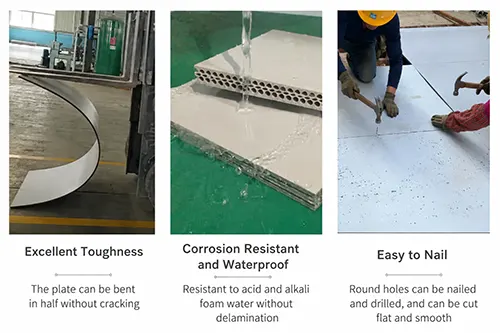
PP corrugated plastic sheets, formally known as “polypropylene corrugated plastic sheets,” are plastic sheets with a hollow structure manufactured through an extrusion molding process using polypropylene (PP) resin as the primary raw material.
They typically appear as flat sheets with a three-row perforated hollow design inside.
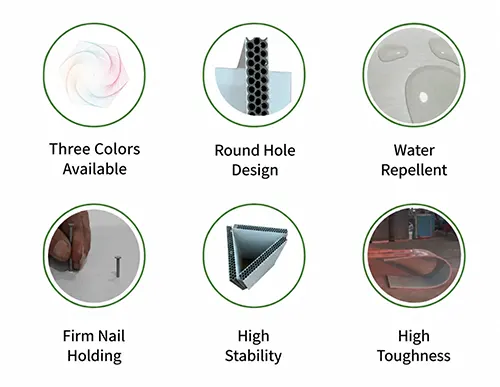
The thickness can be adjusted between 13 mm and 20 mm as needed, and colors can be customized by adding color masterbatches (common options include white with black, black, off-white, and red).
As a new type of eco-friendly plastic material, its core characteristics can be summarized as five key advantages: “lightweight, strong, durable, cost-effective, and eco-friendly.”
Lightweight and High Strength
At the same thickness, the weight of corrugated plastic sheets is not significantly different from that of wooden boards, but they are much lighter than metal sheets.
The perforated hollow structure of corrugated plastic sheets disperses stress, reducing their own weight while enhancing their strength and rigidity.
They can withstand a certain amount of compression or folding without breaking easily.
Excellent Weather and Corrosion Resistance
Polypropylene inherently possesses good chemical stability and can withstand corrosive environments such as weak acids, weak alkalis, and salt spray.
It maintains stable performance within a temperature range of -30°C to 70°C and does not become damp or moldy like wood, nor does it rust like metal.
It is suitable for long-term use in outdoor or humid environments.
Waterproof, Moisture-Resistant, and Insulating
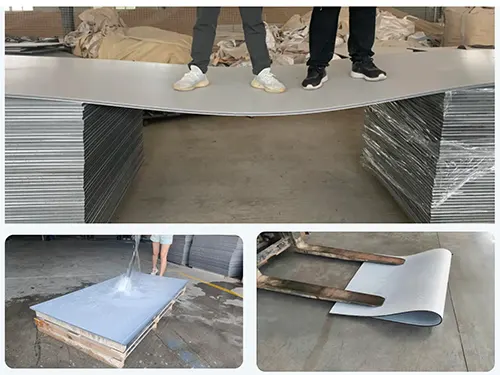
The sheets are non-porous, preventing water molecules from penetrating; they will not warp even after prolonged immersion in water.
They also offer excellent electrical insulation properties and are corrosion-resistant and resistant to acids and alkalis.
Low Cost and Easy to Process
Compared to metal sheets and acrylic sheets, PP corrugated plastic sheets have lower raw material costs and can be processed into various shapes through cutting, welding, printing, and other techniques to meet the needs of different applications.
Environmentally Friendly and Recyclable
As a thermoplastic, PP corrugated plastic sheets are 100% recyclable.
They do not produce toxic or harmful substances when discarded, aligning with current “green and eco-friendly” industry trends.
They are particularly suitable for the food and pharmaceutical industries, which have high environmental standards.
How Are PP Corrugated Plastic Sheets Manufactured? An Analysis of the Core Process
Although PP corrugated plastic sheets may appear simple, their production process requires strict process control to ensure the sheets’ flatness, strength, and stability.
The core production process primarily consists of the following six steps:
Raw Material Proportions and Mixing
PP resin pellets (the primary raw material) are combined with auxiliary materials—such as color masterbatch (for color adjustment), antioxidants (to extend service life), and UV stabilizers (to prevent aging in outdoor applications)—in specific proportions and fed into a mixer.
The mixture is thoroughly stirred at high temperatures to form a uniform blend.
Melt Extrusion
The mixed raw materials are fed into an extruder. Through the rotational compression of the screw and heating of the barrel (temperature controlled at around 200°C), the solid raw materials gradually melt into a viscous plastic melt.
The melt is then pushed into a specially designed “hollow die,” where the internal flow-diverting structure divides the melt into multiple layers, forming a hollow cavity.
Traction and Cutting
The cured sheets are conveyed forward at a steady speed via a traction machine to prevent deformation caused by stretching;
Finally, automatic cutting equipment precisely cuts the sheets to preset lengths (such as standard dimensions of 1.83 × 0.915 m or 1.2 m × 2.4 m, or custom sizes requested by the customer), producing the finished sheets.
Quality Inspection
The cut sheets undergo rigorous inspection, including checks for thickness deviation (tolerance must be within ±0.1 mm), flatness, water resistance, load-bearing capacity, toughness, and nail penetration tests.
Non-conforming products are returned to the production line for reprocessing.
Finished Product Packaging and Storage
Qualified panels are uniformly stored in the warehouse, then stacked and packaged according to specifications.
They are stored in a dry, well-ventilated warehouse to prevent direct sunlight and humid environments from affecting their performance.
How to Choose PP Corrugated Plastic Sheets? 4 Key Points to Avoid Pitfalls
The quality of PP corrugated plastic sheets on the market varies widely, with prices ranging from tens to hundreds of yuan per square meter.
If you choose blindly, you’re likely to run into problems. The following 4 key points will help you select a product that offers “great value for money and meets your needs”:
Inspect the Appearance to Make a Preliminary Assessment of Quality
High-quality panels: The surface is smooth, free of scratches and bubbles, with uniform color (no localized color variations);
The hollow cavities are unobstructed; and the edges are neatly cut (no burrs).
Low-quality panels: The surface is prone to dents and bubbles; the color is uneven;
The hollow cavities may be deformed due to insufficient mold precision (affecting strength); and the edges are unevenly cut.
Simple Tests to Verify Core Performance
Water Resistance Test: Soak the panel in water for 24 hours and observe whether it absorbs water or warps (high-quality panels show no noticeable changes, while low-quality panels may swell or soften).
Load-Bearing Test: Place the panel off the ground and have 3–5 people stand on it simultaneously to observe how it bends under the load.
High-quality panels should not crack, while low-quality panels may break immediately or suffer severe deformation.
Temperature Resistance Test (for outdoor use): Place the panel in boiling water at 70°C for 1 hour;
After removal, observe whether it has softened or discolored (high-quality panels show no significant changes, while low-quality panels may soften or discolor).
Toughness Test: Use a forklift to press the panel in half; check if it breaks.
High-quality panels will not break and will return to their original shape when the pressure is released.
Nailing Test: Drive a nail into the panel at a point more than 10 mm from the edge and check for cracks.
Compare Prices, but Don’t Blindly Chase the Lowest Price
The price of PP corrugated plastic sheets is primarily determined by “raw material quality,” “thickness,” and “manufacturing complexity”:
Sheets made from eco-friendly raw materials and those with anti-aging properties are 10%–20% more expensive than standard types, while thicker sheets cost at least 10% more than thinner ones.
If you encounter products priced significantly below the market average (such as standard 15mm sheets priced below 50 yuan per square meter), be wary of potential hidden issues and avoid incurring higher long-term costs due to the low price.
Maintenance and Future Trends for PP Corrugated Plastic Sheets
Daily Maintenance: Tips for Extending Service Life
Cleaning: Surface stains can be wiped directly with a damp cloth or rinsed with a high-pressure water jet.
Storage: Store in a dry, well-ventilated environment and avoid direct sunlight (sheets without UV protection are prone to aging when exposed to prolonged sunlight).
When stacking, do not exceed a height of 1.5 meters (to prevent deformation of the bottom sheets due to pressure), and ensure the bottom is supported by at least three wooden blocks.
Use: Avoid prolonged exposure to high temperatures (such as heat sources exceeding 80°C) to prevent the panels from softening;
Avoid scratching the surface with sharp objects (although this does not affect structural strength, it may compromise appearance and water resistance).
PP corrugated plastic sheets are not just “ordinary plastic sheets,” but rather a “multifunctional material” that combines light weight, high strength, weather resistance, and environmental friendliness.
Understanding their core characteristics, application scenarios, and key selection criteria will not only help you choose the right material for your specific needs but also allow you to see the immense potential behind these “small sheets”—in the future, they may become the “ideal substitute” for many traditional materials, driving the transition toward lightweight and eco-friendly solutions across various industries.
Conclusion
PP corrugated plastic sheets have evolved from a simple plastic panel into a high-performance material with broad application potential.
Their unique hollow structure, combined with the inherent properties of polypropylene, gives them an excellent balance of lightweight design, mechanical strength, weather resistance, moisture resistance, recyclability, and cost efficiency.
From raw material selection and extrusion molding to quality inspection and proper storage, every stage of the manufacturing process directly affects the final performance of the sheets.
Therefore, understanding the production process and key quality indicators is essential when selecting PP corrugated plastic sheets for different applications.
Whether used for packaging, advertising boards, protective panels, construction solutions, agricultural applications, or industrial products, choosing the right thickness, material quality, and surface treatment can significantly improve performance and service life.
Buyers should avoid focusing only on price and instead evaluate factors such as raw material quality, structural integrity, durability, and manufacturer reliability.
With increasing demand for sustainable, lightweight, and recyclable materials, PP corrugated plastic sheets are expected to play an even greater role in replacing traditional materials such as wood, metal, and other non-recyclable panels.
As industries continue to pursue greener and more efficient solutions, this versatile material will continue to expand its applications and create new possibilities across multiple sectors.