


EPS (expandable polystyrene) foam, commonly used as packaging material for traditional home appliances—particularly large appliances such as washing machines—offers excellent cushioning, shock absorption, and waterproof properties.
However, this material presents challenges such as difficulty in recycling due to its light weight and bulky nature, as well as issues like white pollution and chemical contamination during production.
At the same time, as the home appliance industry faces increasingly stringent global environmental regulations (such as China’s “Dual Carbon” goals and the EU Packaging Directive and PPWR proposal) and growing consumer demand for sustainable products, the search for recyclable, reusable, and lightweight eco-friendly alternative packaging materials has become an urgent industry need.
In addition to foam plastics such as EPS and EPP, eco-friendly packaging materials suitable for home appliances include PP corrugated core panels, high-strength corrugated cardboard, and corrugated paperboard.
PP corrugated core board offers lightweight, high-strength, waterproof, moisture-resistant, and recyclable properties.
Combine it with the cushioning performance and cost advantages of high-strength corrugated cardboard or corrugated paperboard to create a composite packaging solution.
This combination delivers superior performance, enhances environmental friendliness, and achieves optimal cost efficiency.
The objective of this project is to investigate the use of novel PP corrugated core sheets and high-strength corrugated cardboard as the primary materials for eco-friendly washing machine packaging.
The project proposes a composite packaging structure design suitable for washing machine products, effectively replacing foam-based plastic packaging such as EPS and EPP.
It meets the packaging, transportation, and protective requirements for washing machine products.
The design also complies with EU regulations that prohibit the use of foam-based plastic packaging, promoting the development of home appliance packaging toward greater environmental sustainability, lighter weight, and recyclability.
Analysis of the Material Properties
PP corrugated Boards
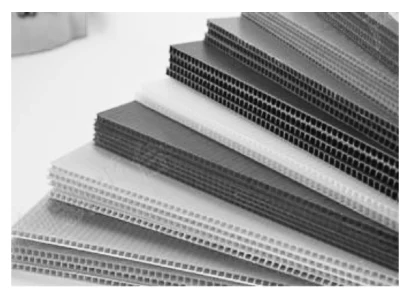
PP corrugated boards are plastic sheets with a corrugated structure produced through extrusion, using PP (polypropylene) as the primary raw material through an extrusion molding process.
Due to the recyclability of the raw material and the zero-emission production process, it has gained global recognition as a new type of eco-friendly material.
It can serve as a substitute for wood, cardboard, metal sheets, and solid sheets made of the same material in many fields, offering unparalleled advantages compared to other sheet materials.
First, corrugated panels are inherently lightweight, with a density ranging from approximately 0.4 g/cm³ to 0.96 g/cm³.
They also exhibit excellent environmental adaptability (operating temperature range: -20°C to 80°C, water absorption <0.01%), impact resistance, and compressive strength.
For a detailed comparison of the performance of corrugated panels with different grammages and thicknesses, see Table 1.
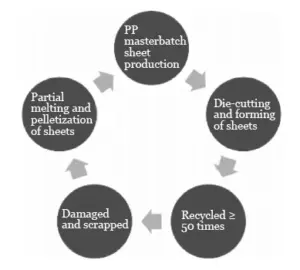
When used as the primary packaging material, corrugated boards offer outstanding environmental benefits: they are 100% recyclable, support over 50 cycles of reuse, and have a lifespan 4 to 10 times longer than that of corrugated cardboard. and have extremely low carbon emissions throughout their entire life cycle.
Additionally, corrugated panels offer water resistance, moisture protection, dustproofing, and static protection, safeguarding products from environmental factors.
As structural packaging components, corrugated boards are easy to bend, cut, thermoform, and print.
They can be joined through methods such as structural interlocking and ultrasonic welding, offering significant design flexibility.
| No. | Grammage (g/m²) | Vertical Compression Strength (N) | Vertical Pressure Resistance (N) | Vertical Tensile Strength (N) | Tear Strength (N) |
|---|---|---|---|---|---|
| 1 | 700 | 452 | 1285 | 286 | 39 |
| 2 | 800 | 616 | 1563 | 349 | 66 |
| 3 | 950 | 1132 | 1814 | 430 | 110 |
| 4 | 1150 | 1843 | 2217 | 570 | 140 |
| 5-corrugated | 1150 | 2314 | 3517 | 636 | 207 |
| 6-corrugated | 1650 | 3537 | 5108 | 836 | 317 |
Table 1. Comparison of the Properties of Hollow Boards with Different Grammages and Thicknesses
High-Strength Cardboard
The primary raw material for paper cushioning materials is renewable pulp, which is widely available, recyclable, and biodegradable, with a well-established recycling system.
The selection of cardboard is fundamental to designing eco-friendly packaging.
Currently, paper cushioning packaging for washing machines primarily uses two types of materials: corrugated cardboard and corrugated cardboard, each offering distinct advantages in terms of mechanical properties and processing characteristics.
Due to its mature processing technology and lower cost, corrugated cardboard has become the primary choice for paper cushioning packaging materials.
Different flute combinations can meet diverse protection needs: BC fluting (thickness 2.5 mm–3 mm) has good flat compression resistance and is suitable for corner protection;
EB fluting (thickness 4 mm–4.5 mm) has excellent vertical cushioning performance and is suitable for withstanding vertical impacts.
Research indicates that the static compressive strength of five-layer BC corrugated cardboard can reach over 140 kPa, fully meeting the load-bearing requirements for washing machine packaging.
Corrugated cardboard, due to its unique hexagonal structure, offers higher energy absorption efficiency.
Experimental data shows that, under the same density conditions, the energy absorption per unit volume of corrugated cardboard is approximately 40% higher than that of corrugated cardboard.
However, the production cost of corrugated cardboard is relatively high, and its edge compressive strength is insufficient, requiring special treatment for reinforcement.
Paper-based cushioning materials exhibit significant anisotropic characteristics;
The compressive strength of corrugated cardboard in the direction perpendicular to the flutes is 1.5 to 2 times that in the parallel direction, while the energy absorption efficiency of corrugated paperboard in the in-plane direction is far higher than in the thickness direction.
This characteristic must be fully considered in structural design to ensure that the material’s primary load-bearing direction aligns with the actual direction of force application.
Advantages of Composite Applications
Given the high-strength protective properties and waterproof and moisture-resistant characteristics of PP corrugated panels, combined with the high cushioning capacity and low cost of corrugated cardboard, laminating the two materials to form packaging structural components creates a packaging system with excellent overall performance.
Both materials are easy to process and mold, offering flexibility in structural design and practicality in production.
Additionally, both materials have high recycling rates; using them in combination maximizes the packaging’s potential for recycling.
The lightweight nature of PP corrugated boards helps reduce the overall weight of the packaging, thereby lowering carbon emissions from transportation.
Composite packaging made from PP corrugated boards and cardboard achieves the optimal balance of environmental benefits, economic efficiency, and protective performance.
The combination of PP corrugated panels and cardboard is not a simple layering of materials, but rather a performance leap achieved through material complementarity and structural innovation.
From a mechanical perspective, the high flexural stiffness of PP panels combined with the excellent compressive performance of cardboard creates a protective system that is both rigid and flexible.
In terms of environmental benefits, the composite solution reduces carbon emissions by 21% compared to traditional EPS (expanded polystyrene) packaging, while also enabling material recycling.
Application Solutions for Washing Machine Packaging
Packaging Structure Design
1. Top-Loading Washing Machines
The packaging structure design for top-loading washing machines primarily involves components such as the bottom liner, inner liner, top liner, and front and rear corner protectors, with each packaging element providing protection for its corresponding component.
Bottom Liner and Central Support Structure
The bottom liner supports the weight of the entire machine, protecting the base and bottom of the box, while the central tower-shaped support structure provides support and positioning for the drum assembly.
PP corrugated panels (800–1150 g/m²) and corrugated cardboard (6 mm edge length) are primarily used to assemble the liner.
The bottom support surface and sides feature a layered structure where corrugated cardboard cushions the spaces between the corrugated panels, with an energy absorption capacity of approximately 30 kJ/m³.
The central tower-shaped support structure is primarily assembled by dividing PP corrugated panels into grids and interlocking them in a cross-directional grid pattern.
This structure is stable and reliable, providing the necessary support and protection for the barrel assembly.
Incorporate clearance designs at the four corners and other locations to accommodate the base structure.
Add edge strips (made of PVC or solid cardboard) to the bottom of the base liner, a critical load-bearing component, to enhance structural strength.
Inner Liner
Use the inner liner to secure the drum components horizontally and vertically, while also supporting the frame and door cover; together with the top liner, it protects the top frame.
Assemble the inner liner entirely from PP corrugated panels (800 g/m²).
Design the vertical components as parallel main support panels, while contour the sides to fit the frame, balance rings, and other components.
Interlock U-shaped corrugated panels at the top and bottom using snap-fit joints and secure them with ultrasonic welding to enhance the overall structural reliability of the assembly.
Add triangular diagonal stiffeners at the corners to increase support strength.
Top Liner
Use the top liner to protect the frame and the top of the box, absorb impacts to the top, and withstand stacking pressure.
Manufacture the main body of the top liner by cutting, folding, and welding a single sheet of PP corrugated board (800–1150 g/m²).
The side walls form a corrugated structure filled with corrugated cardboard to enhance cushioning strength.
Install welded support blocks at the four corners; equip these blocks with internal reinforcing ribs.
Add a support strip (solid cardboard or fiberglass tube) to the rear-central section of the top liner to serve as the primary load-bearing area during clamping and similar operations, distributing stress away from the corrugated panels.
Front and Rear Corner Protectors
Use front and rear corner protectors to provide impact resistance at the edges and reinforce the overall protection of the box.
Form the corner protectors from a single piece of B-flute corrugated cardboard.
Add internal diagonal ribs for support and bond them to the cardboard at the openings on the inner surface to enhance overall structural integrity.
All components undergo the following key performance tests.
Choose PP corrugated panels with a density of 800–1150 g/mm² to balance the strength needed for packaging protection and the required cushioning effect.
2. Front-Loading Washing Machines
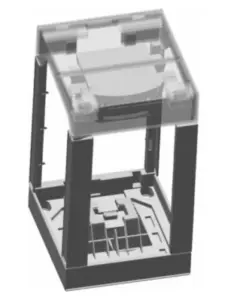
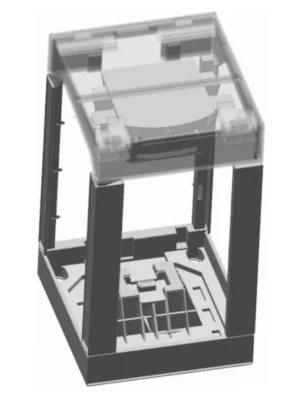
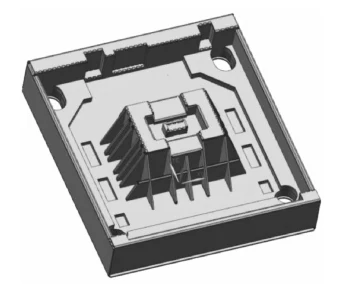
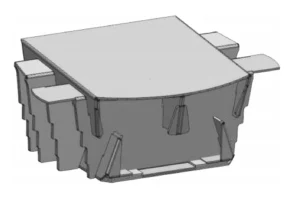
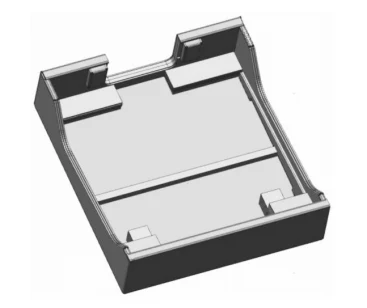
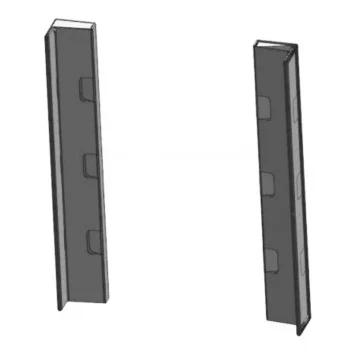
The packaging for front-loading washing machines consists of top padding, front and rear corner protectors, and bottom padding.
The bottom padding is the most critical component; in addition to providing excellent cushioning, it must also meet high strength requirements and ensure long-term stability during stacking.
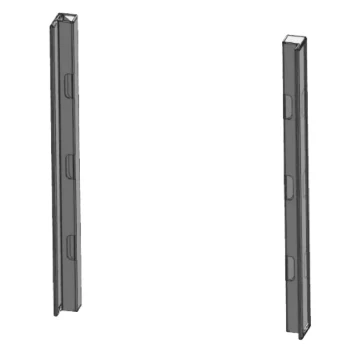
The corrugated board used for the corner protectors must also possess high compressive strength.
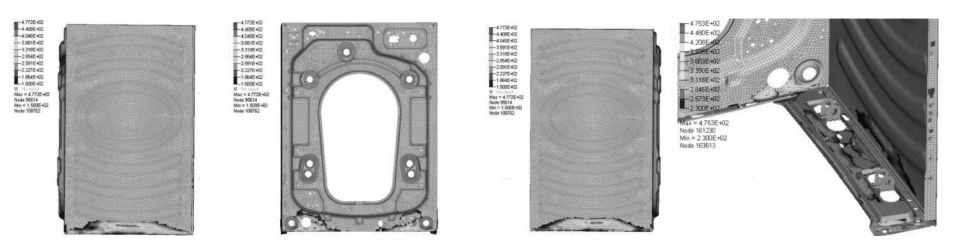
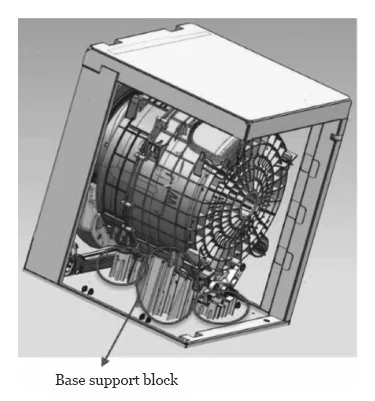
According to simulation analysis, the bottom of the box and the bottom reinforcement components experience the most concentrated stress during a drop test.
Therefore, the bottom liner uses 1150 g/mm² PP corrugated board and 1650 g/mm² PP corrugated board as the primary materials, while the corner protectors use 950 g/mm² PP corrugated board.
Key Performance Guarantees
1. Transportation Testing
Drop Test
Simulates drops during transportation to verify the packaging’s protective effectiveness for the entire unit and key components.
Specific test procedures include one drop onto the bottom surface from a height of 600 mm, one drop onto each of the four edges from a height of 450 mm, and one drop onto the front-right corner from a height of 300 mm.
The acceptance criterion requires that the minimum distance between the U-shaped bracket and the roller be ≥ 3 mm.
Inclined Impact Test:
The test involves simulated impacts on a test rig, with two impacts on each of the four sides and one impact on each of the box’s creased edges and diagonal edges.
Vibration Test:
Simulates vibrations during long-distance transport to verify the cushioning system’s protection of internal components.
A vertical linear vibration table is used for a 3-hour random vibration simulation test.
Clamping Force Test:
Simulates clamping during transport to verify the packaging structure’s resistance to clamping forces.
The test involves clamping at four positions—one at each of the clamping directions specified on the outer packaging—with a clamping force of 8–10 kN and a duration of 60 seconds.
Pressure stacking test:
To verify the stacking strength of the packaging system and ensure compliance with warehousing and transportation requirements.
The test load formula is F = Kp(n-1)g, where K is the deterioration coefficient during transit (typically 2 for washing machines), n is the maximum allowable stacking height indicated on the carton, p is the gross weight, and g is the acceleration due to gravity.
The pressure is applied for 48 hours. The acceptance criterion requires that the difference between the height of the packaged unit after testing and the total height of the packaging before testing be less than 19 mm.
For all the above test results, the product must not have any scratches, dents, or deformations that would affect sales, and it must function properly when powered on.
2. Physical Stacking Test
This test verifies the stacking strength of the packaging system to ensure it meets warehousing requirements.
Determine the number of stacking layers according to the markings on the carton.
If the carton lacks markings, calculate the number of layers using the formula N = |5 m / product packaging height| (round down to the nearest integer) + 1. The test duration is 30 days.
The acceptance criterion requires that, upon completion of the test, the deviation from the plumb line in the vertical direction must not exceed 20 mm/m.
3. Environmental Testing
Verify the packaging system’s waterproof and moisture-proof performance, as well as its protective function for the entire unit (e.g., in high-humidity environments).
The specific testing method involves stacking the cartons according to the number of layers indicated on the packaging, placing them in a thermal shock chamber, and heating them from room temperature to 60°C within 30 minutes, holding at 60°C for 11 hours, then cooling them to -20°C within 1 hour, maintain at -20°C for 11 hours, and then raise the temperature to 60°C within 1 hour.
This cycle is repeated 10 times. After the cycle is complete, conduct a visual inspection and power-on test;
The appearance must be free of damage or defects. Immediately after the test, power on the unit; it must function normally, and safety compliance testing must meet requirements 24 hours later.
Reuse Models
In addition to material selection and structural design, eco-friendly packaging depends heavily on reuse models and the development of robust recycling pathways, which are divided into closed-loop recycling and open-loop recycling.
Closed-loop recycling establishes a system in which used PP corrugated boards are collected, cleaned, inspected, and reintroduced into the packaging production process.
This approach is particularly suitable for B2B or specific distribution channels.
Open-loop recycling refers to the separate recycling of materials such as PP corrugated boards and cardboard through their respective established recycling channels for reuse.
Conclusion
This paper demonstrates that composite packaging combining PP corrugated boards and cardboard offers significant advantages for the environmentally friendly packaging and transport protection of washing machines.
Optimizing the composite structure reduces impact loads on key components, ensuring that the washing machines receive effective protection.
At the same time, this approach provides substantial environmental benefits: it lowers carbon emissions over the entire life cycle by 21% and achieves a 100% material recycling rate.
Eco-friendly packaging will become the future trend in the home appliance industry.
Future development will focus on recyclable packaging systems and digital twin testing platforms to further optimize packaging design and transportation validation.