


PP plastic corrugated pallet boxes have become an increasingly important solution in modern industrial packaging and returnable logistics systems. Compared with traditional corrugated cardboard boxes and heavy injection-molded containers, PP corrugated plastic boxes provide a balance of durability, lightweight structure, recyclability, and long-term cost efficiency.
These containers are widely used in industries such as electronics, automotive manufacturing, precision components, warehousing, and supply chain transportation, where repeated use, product protection, and environmental sustainability are critical requirements.
Their hollow corrugated structure not only reduces material consumption and overall weight but also delivers excellent impact resistance, moisture resistance, and cushioning performance during transportation.
Unlike disposable packaging materials, PP corrugated pallet boxes are designed for long-term circulation and repeated reuse.
Through specialized production processes—including sheet extrusion, die-cutting, ultrasonic bonding, heat creasing, and modular accessory assembly—these containers can be customized into various structures and specifications according to different industrial applications.
Another major advantage of PP corrugated plastic packaging is its environmental performance.
Since the box body, accessories, corner protectors, rivets, and reinforcing components are all manufactured from polypropylene (PP), the entire container can be recycled directly after its service life without complex material separation procedures.
This makes it highly compatible with modern green manufacturing and circular economy requirements.
This article introduces the production equipment, manufacturing process, structural features, application fields, and comparative advantages of eco-friendly PP corrugated plastic pallet boxes, while also explaining their growing role in industrial returnable packaging systems.
Production Equipment: Dedicated Automatic Production Line for PP Plastic Hollow Boards
Processing
PP plastic pellet feeding → Screw extruder → Extrusion die (adjustable for required board thickness and width) → Hot setting with circulating water cooling → Slitting to adjust board length to the required dimensions.
Post-processing Production Equipment:
Die-cutting machines and rotary die-cutting machines; laser die-cutting templates are created based on the unfolded dimensions (length × width × height) of the box.
Ultrasonic heat-sealing machine: Specialized equipment independently developed and assembled by the company; used to bond overlapping double-layer sheets on both sides of the box body to ensure structural integrity, as well as to bond the box lid to the body, allowing the lid to fold down without the need for hinges.
Electric heating creasing machine:
A specialized machine independently developed by the company. It creates crease lines for foldable PP hollow board containers, allowing them to be folded repeatedly without breaking and ensuring they remain reusable.
Four-head automatic punching machine:
A specialized machine independently developed by the company. It punches rivet holes at the four corners of the container.
The machine can adjust the distance between the two holes on the long sides and the two holes on the short sides according to the container’s size.
All four holes are completed simultaneously, which not only increases production volume but also ensures uniform positioning and dimensions of the holes on the box body, resulting in a visually appealing finished container.
Production Process from Sheet Material to Finished Container
Drawing:
Based on the length, width, and height dimensions specified in the customer’s order, a flat pattern of the box body is drawn.
Determine the length and width dimensions of the hollow board, then draw the laser die-cutting template for the box, including the reserved holes on both sides for installing the handles.
Die-Cutting:
The box lid is die-cut on a die-cutting machine. Due to the large unfolded area of the box body, it must be die-cut on a rotary die-cutting machine. All scrap material generated after die-cutting is recycled.
Installing Handles:
Install the pull tabs into the reserved holes on the die-cut box panels. The pull tabs consist of two interlocking inner and outer pieces, which are injection-molded from PP plastic pellets.
Installing Long and Short Edge Strips:
Fold the box along the crease lines. Install two edge strips with a 5mm gap on each long side, and two edge strips with a 10mm gap on each short side.
The edge strips are also produced using an extruder with PP plastic pellets.
Their function is to reinforce the four edges of the box and ensure smooth, rounded edges, thereby increasing the box’s edge strength.
This prevents scratches to the products and the hands of packaging workers when placing items inside.
Bonding the Double-Layer corrugated Panels on Both Sides:
Place the box body—with the handles and four edge strips already installed—onto specialized ultrasonic equipment for bonding.
The bonding points are located at the four corners where the wide and long sides meet on both sides of the box.
This process bonds the double-layer corrugated panels on the two wide sides together, ensuring the box is stable and sturdy.
For foldable, die-cut corrugated boxes, creases must first be pressed using the company’s proprietary electric heat creasing line before bonding and forming.
Installing 4 corner protectors:
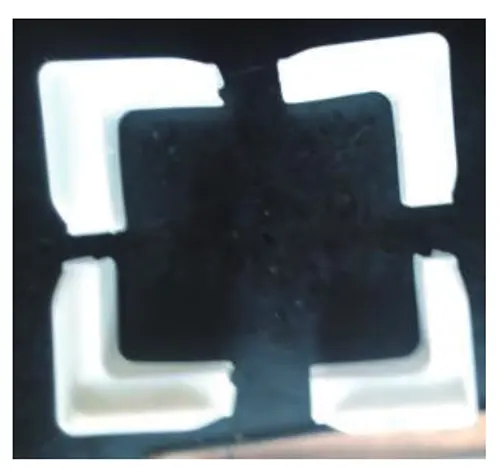
Install 4 corner protectors (left and right) at the four corners of the bonded box. These corner protectors are also injection-molded from PP plastic pellets.
Their function is to cover the rough edges where the 5mm-gap long side strips meet the 10mm-gap wide side strips.
More importantly, they reinforce the load-bearing capacity of the box’s perimeter and secure the position of the upper box during stacking, ensuring that the stacked containers remain neat and do not shift.
Drilling:
Holes are drilled using the company’s proprietary four-head automatic drilling machine. These holes are used for installing plastic rivets.
Installing Plastic Rivets:
The plastic rivets, injection-molded from PP pellets, consist of an inner and outer set.
The rivets with large round heads are inserted into the holes on the front of the box corners, while the smaller rivets are fitted inside the box corners to form a complete assembly.
This secures the box corners, the box body, and the side strips together, ensuring the box remains structurally sound and resistant to deformation.
Installing the File Holder:
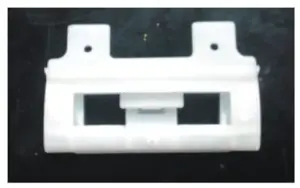
The file holder is installed on the front of the box and bonded using a specialized ultrasonic machine developed by the company.
The file holder components are also injection-molded from PP plastic pellets.
This allows the box lid to be inserted into the file holder, preventing it from curling outward, and enables the insertion of product information cards, making the contents clearly visible during transportation and warehousing.
Bonding the Box Body and Lid:
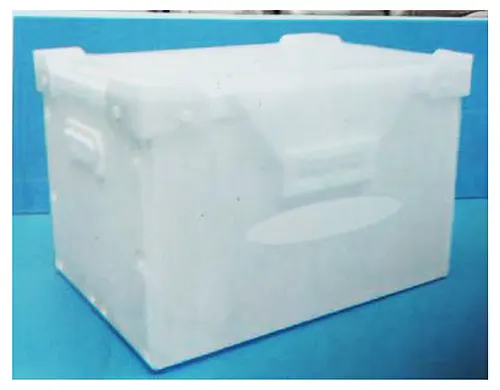
The lid is bonded to the box body using a specialized ultrasonic machine developed by the company.
This protects the contents from damage when stacked under other boxes and prevents the entry of dust and insects.
Features of Eco-Friendly PP Plastic Pallet Boxes
Single Raw Material:
PP plastic (polypropylene) may contain a portion of recycled material, except in applications such as food and pharmaceutical packaging, which require 100% virgin material. The box body, lid, and accessories are all made of PP plastic.
Service Life:
When reused, these containers can last for over 8 years under optimal conditions, or 3–5 years under typical use.
If the weight of the contents is high, the service life will be correspondingly shorter. Example: Qinqin Precision Electronics.
100% Recyclable:
Since the box body, side strips, corner pieces, rivets, file holders, and handles are all made from a single type of PP plastic.
When damaged and no longer suitable for reuse, no pre-treatment or additives are required. Simply feed the entire unit into a shredder to grind it into irregular granules for recycling.
Zero Waste Generation During Production:
From sheet extrusion to the final assembly of the pallet boxes, the entire process—including sheet extrusion on dedicated production lines, die-cutting, ultrasonic bonding, automatic punching, and manual installation of handles, long and short edge strips, four corner pieces, and plastic rivets—generates no exhaust gases, wastewater, dust, or odors. The production workshop remains uncontaminated.
Excellent moisture resistance, shock absorption, and cushioning performance:
The lids and accessories of the pallet boxes are made of PP plastic, providing excellent moisture resistance.
Since the panels consist of multiple hollow vertical strips filled with air, they offer superior shock absorption and cushioning. This ensures effective protection during transportation.
Versatility:
Depending on the requirements of the products being transported, the pallet boxes can be customized with features such as anti-static, conductive, or rust-proof properties to meet the specific needs of electronic product transportation.
Easy to Stack, Stable, and Collapse-Resistant:
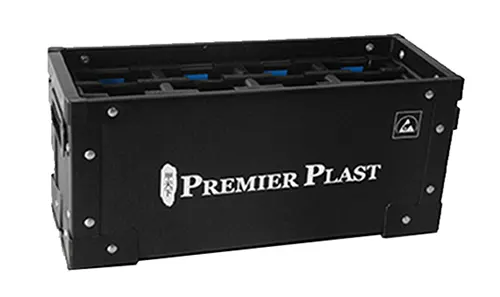
The top corners of the box feature raised 70×70×10 mm right-angle edges that secure the position of the box above, preventing it from shifting during stacking.
This ensures neat stacking and prevents tipping or collapse caused by uneven stacking or an unbalanced center of gravity.
High corner and edge strength:
Edge strips with a 5mm gap are installed along the long sides, while those with a 10mm gap are installed along the short sides.
Combined with four corner fittings at the edges, these are secured using plastic rivets in a three-point configuration, significantly enhancing corner and edge strength.
Excellent Modularity:
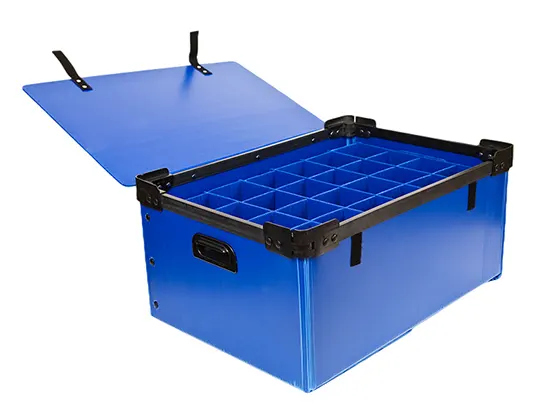
The interior can be configured with PP corrugated panel dividers, providing a dedicated compartment for each product to prevent collisions;
Plastic thermoformed trays can be used, with one product per cell, allowing for multi-layer stacking;
EPE or EVA cushioning materials can be incorporated to create compartments that enhance shock absorption and protect the products.
Can Be Converted into a Folding Box:
Although PP corrugated panels are highly rigid, the company’s proprietary electrically heated embossing machine resolves the challenges of folding without breakage or springback.
Delivering full boxes and returning empty ones significantly reduces space requirements, lowering transportation costs during logistics.
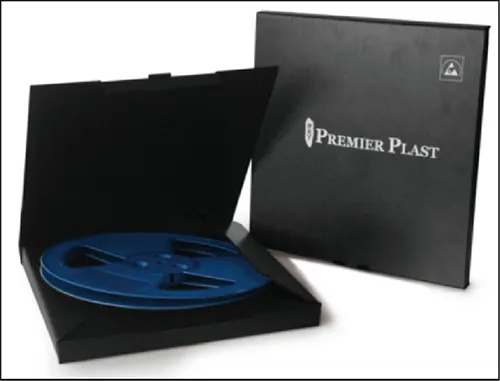
Handles on Both Sides:
The box features handles on both sides designed with sufficient strength and an ergonomic shape to facilitate easy handling during loading and unloading.
Comparison with Common Injection-Molded Containers
No Need for Metal Injection Molds:
PP returnable crates require only laser-cut die-cutting templates—one set for the body and one for the lid—significantly reducing initial investment costs and shortening the production cycle.
For example, for a 400×300×150 mm injection-molded product, the metal molds for the body and lid cost us 135,000 yuan.
In contrast, a laser die-cutting template of the same dimensions costs only 520 yuan.
Reduced Packaging Material:
Injection-molded products are solid, whereas corrugated panels feature numerous small, rectangular air-filled cells, resulting in a lower weight per unit area.
Simple Processing:
By simply changing the die-cutting template, we can produce storage bins of various specifications and dividers of various shapes, with a short production cycle.
Comparison with Paper Corrugated Cardboard Boxes
Eco-friendly PP plastic corrugated pallet boxes cost several times more than corrugated cardboard boxes.
Although the initial investment is higher, they can be reused for several years, so the actual cost per use is lower than that of corrugated cardboard boxes.
Identification Markings Can Also Be Printed:
In addition to featuring a built-in pocket for inserting product information cards, PP corrugated plastic returnable containers can also be printed with various identification markings.
For example, returnable containers used between two companies:
Internal markings may include product name, model, specifications, quantity, and recycling symbols.
Application Areas of Eco-Friendly PP corrugated Plastic Returnable Containers
1. Most eco-friendly PP corrugated plastic returnable containers are used by Japanese companies operating in China.
These companies place a high priority on environmental protection and implement these principles in their production processes.
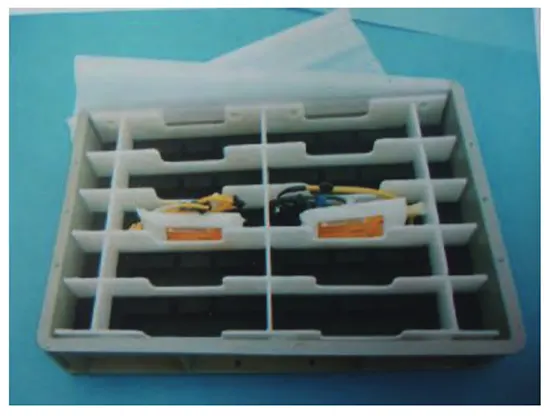
For example, in precision electronics manufacturing, many components and parts are outsourced for processing, while the company retains control over the production of key components and final assembly.
However, they require each subcontractor to manufacture PP corrugated plastic returnable containers for packaging products in accordance with specific packaging requirements.
These containers are generally designed and manufactured in accordance with the Japanese companies’ overall packaging specifications to ensure the safety and integrity of the products during transit.
This facilitates identification, counting, and quality inspection upon arrival at the warehouse.
Automotive Industry.
Each automobile is assembled from tens of thousands of components, most of which are outsourced.
These components vary widely—some are small, others large; some must not be scratched or damaged, while others are fragile. Their shapes range from simple to complex, and their weights vary from light to heavy.
Transportation routes vary in distance, and road conditions range from good to poor.
To meet the packaging requirements for these products, the design of PP hollow board pallet boxes has been adapted to accommodate large and heavy items.
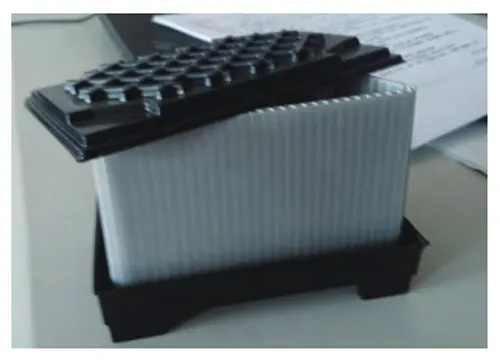
The thickness of the hollow board is increased based on the weight of the contents, such as 8, 10, 12, or 15 mm. Heat-embossed crease lines are incorporated to facilitate folding.
For extremely heavy items, the design consists of three parts: a top lid, middle side panels, and a bottom panel.
The top lid and bottom panel can be made using large-scale thermoforming or injection molding, depending on the weight of the contents, but the middle side panels are always made of PP hollow board.
Precautions
Since PP hollow board pallet boxes are made of plastic, they must be kept away from open flames during use and must not come into direct contact with heated metal objects, such as soldering irons or hair dryers.
Conclusion
Overall, the advantages outweigh the disadvantages, and these containers meet environmental requirements as well as the needs of relevant factories and enterprises.
However, to change the perception that the initial investment cost is higher than that of cardboard boxes, promotional and outreach efforts must be conducted from multiple angles, and the scope of application needs to be expanded.